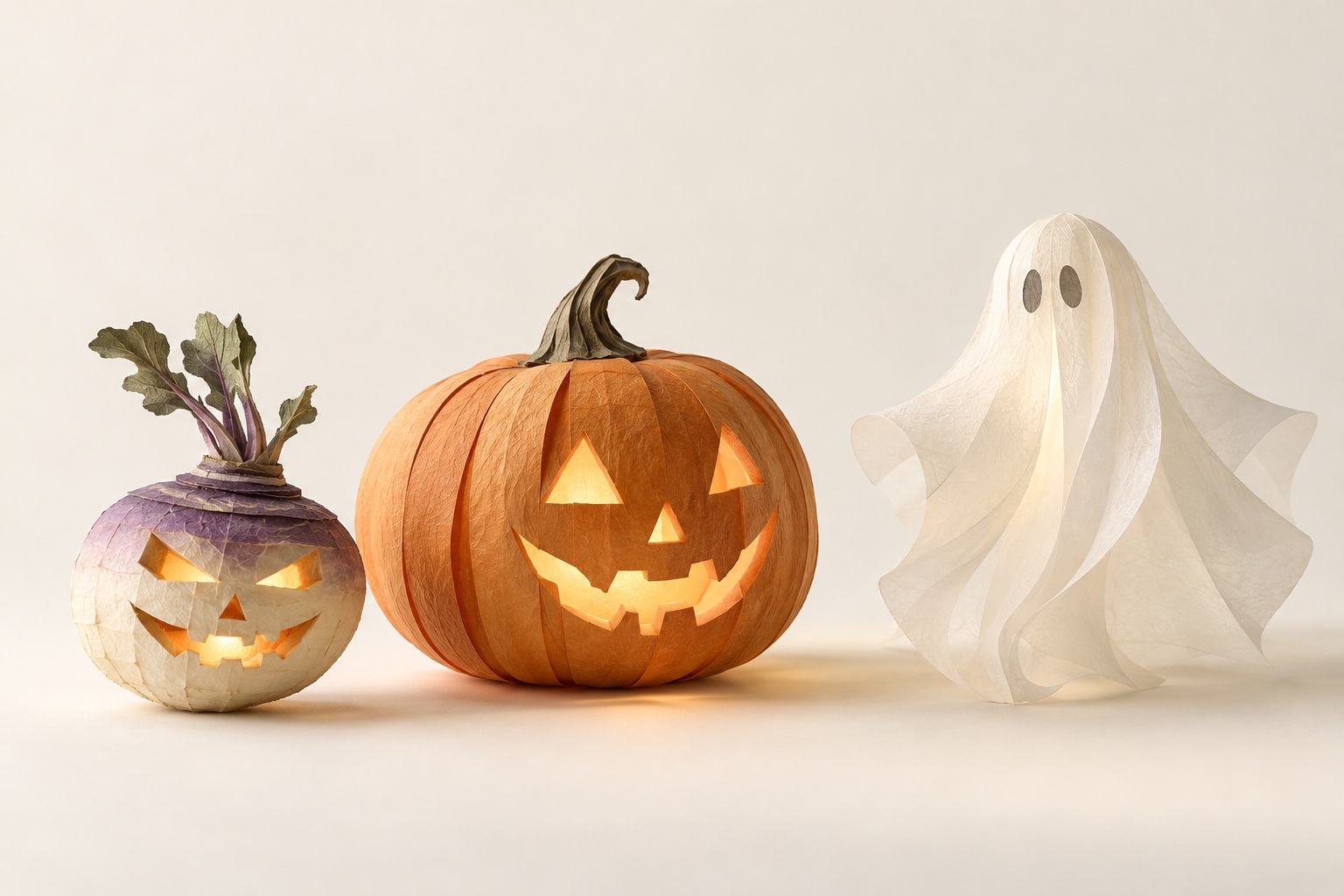
A glowing jack-o’-lantern. The outline of a ghost. These familiar images connect Halloween with beliefs about the dead and customs that changed as they crossed the Atlantic.
Ghosts: imagining the return of the dead
The National Museum of Ireland explains that Halloween was also known as ghost night or spirit night. People expected departed souls to return home and believed harmful spirits could be active. Ghostly masks were also used to frighten neighbors, while disguised visitors entertained at homes.[1]
These traditions help explain Halloween’s association with ghosts. They do not establish an ancient origin for today’s white-sheet ghost. Theatre scholar Sarah Carpenter cautions that similar forms of disguise can carry different meanings in different periods.[2]
Lanterns: from turnips to pumpkins
In Ireland, frightening faces were carved into turnip lanterns. The National Museum of Ireland identifies the pumpkin lantern as an American development of that tradition.[3]
The museum also connects the name Jack-o’-lantern with a folktale about Jack, who could enter neither Heaven nor Hell and wandered with a lantern. This is folklore, not a verified biography or proof of one definitive moment when the custom began.[3]
Why these stories belong at WenzouHese
Our founder is interested in how symbols carry history and memory. Here, we follow familiar images back to their stories, asking why people choose them and how they become part of a celebration.
That curiosity also informs our approach to paper party goods: small details at the table can offer a place to share the meaning of an occasion. This article is one exploration of those meanings.
一盏发光的南瓜灯,一个幽灵的轮廓,便能让人想到万圣节。这些图案背后,有关于亡灵的信仰,也有跨越大西洋、不断变化的习俗。
幽灵:来自人们对亡者归来的想象
爱尔兰国家博物馆介绍,在当地传统中,万圣节也被称为“幽灵之夜”或“灵魂之夜”。人们相信,逝去亲人的灵魂会在这晚回到家中,也认为恶灵可能活动,因此避免独自夜行。幽灵面具则被用来吓唬邻居,装扮者还会上门拜访和表演。[1]
这帮助我们理解幽灵为何与万圣节相连:它背后既有关于亡者归来的信仰,也有装扮、惊吓与邻里互动的习俗。不过,今天常见的白布幽灵轮廓不能直接视作古代形象。戏剧研究者Sarah Carpenter也提醒,装扮习俗即使形式相似,其意义仍会随时代改变。[2]
南瓜灯:从爱尔兰的萝卜,到美国的南瓜
熟悉的南瓜灯,有一位爱尔兰“前辈”:挖空并刻上可怕面孔的萝卜灯笼。爱尔兰国家博物馆指出,南瓜灯是这一传统在美国的发展。[3]
馆方还将Jack-o’-lantern这个名称与一个民间故事联系起来:Jack死后既不能进入天堂,也不能进入地狱,只能带着灯笼四处游荡。这是用来讲述灯笼的传说,不是一个经过史料证实的人物生平,也不能据此断定整个习俗由这个故事一次性产生。[3]
因此,萝卜到南瓜的变化讲述了习俗如何发展,Jack的传说则讲述了人们如何为灯笼赋予故事。两者相关,却不能混为同一种历史证据。
这些故事,为什么出现在WenzouHese?
我们的创始人一直对符号如何承载历史和记忆感兴趣。在这里,我们希望沿着图案回到故事:人们为什么选择它,又怎样把它带进自己的庆祝?
幽灵与南瓜灯让我们看到,一个日常物件可以成为辨认节日、分享故事的媒介。这也与我们做纸制派对用品的初衷相通:希望餐桌上的细节,不仅带来视觉上的点缀,也为理解和分享庆祝的意义留出空间。
这一篇,是我们对节日符号的一次探索。